Organic Mattresses · Materials Guide
Inside an Organic Latex Mattress: Core, Cover, and Comfort Layers
A mattress can be described as natural, organic, supportive, or cool-sleeping, but those words reveal little about how it is actually built. To understand what you are buying, look beneath the label: at the latex core, the layers around it, the cover that holds everything together, and the way those components are joined.
Published October 19, 2026
The phrase “organic latex mattress” sounds satisfyingly complete, as if it names one material and settles the matter. In practice, it describes a family of designs. One mattress may consist of a single latex slab wrapped in cotton. Another may stack several latex layers of different firmnesses beneath a quilted cover. A third may combine latex with cotton, wool, or other materials. All may be presented as natural choices; their feel, maintenance, and material profile can still differ substantially.
The useful question is not simply whether latex appears in the description. It is where the latex is, how much of it the mattress contains, what else is inside, and whether the manufacturer explains those details clearly. This is especially important when comparing a natural rubber mattress with products that use blended latex, synthetic foam, or a natural-material label that applies to only one component.
A mattress is not a pile of ingredients but a small system. The core carries much of the load. Comfort layers influence how readily the surface yields around shoulders and hips. The cover and quilting affect the first impression of softness, temperature, and texture. The foundation beneath the mattress can alter support as well. The result is a sleeping surface whose character emerges from the relationship among its parts.
Begin with the core
In a latex mattress, the core is usually the thickest structural component. It provides the main field of support and contributes to the mattress’s distinctive buoyant response. Unlike some slow-recovering foams, latex tends to respond promptly when weight shifts. It can compress under the body and rebound when pressure is removed, an effect many sleepers describe as springy or lifted rather than deeply enveloping.
That general description does not tell you whether a particular core will feel soft, medium, or firm. Firmness depends on the latex formulation, its density and construction, the thickness of the layer, and the rest of the mattress. A single thick slab can behave differently from two thinner layers arranged together. The same firmness label across two brands is not necessarily a standardized promise of an identical feel.
Ask for the core’s thickness and composition. Is it natural latex, synthetic latex, or a blend? Is it one continuous layer or a stack? Are the layers identical in firmness, or does the mattress use a softer upper section over a firmer base? A precise description gives you something to compare. A broad claim such as “latex comfort system,” without a breakdown, leaves the construction largely to the imagination.
Natural, synthetic, and blended latex
Natural latex is derived from rubber-tree sap and processed into foam. Synthetic latex is made using synthetic rubber. Blended latex combines natural and synthetic materials in varying proportions. These terms refer to different material origins; they do not, by themselves, tell you whether a mattress will suit your body or how long it will last.
For a buyer comparing materials, the central task is to find out what “natural” means in the specific product description. Does it refer to the latex core alone, or to the mattress as a whole? Is the latex described as 100% natural, or is the formulation a blend? Are other foams used elsewhere in the construction? Clear answers matter because a mattress can contain a natural latex layer without every layer being natural or organic.
Production methods may also be specified. Dunlop and Talalay are commonly discussed latex processes, and each can produce latex with its own characteristics. It is unwise to treat either name as a guarantee of a particular comfort level: the finished layer’s formulation, firmness, thickness, and role in the mattress still matter. When a maker provides process information, use it as one piece of the construction story, not as a substitute for the full specifications.
Comfort layers: the mattress’s first conversation with the body
Above the core, a mattress may have one or more comfort layers. These layers soften the surface, distribute pressure, and influence how much the sleeper settles into the bed. In an all-latex design, the comfort layer may itself be latex, often selected or arranged to feel more yielding than the support beneath it. Other designs use natural fibers or additional materials in the upper layers.
The distinction between “softness” and “support” can be confusing. A plush surface is not automatically supportive, and a firm mattress is not automatically aligned with every sleeper’s needs. The question is whether the design allows the body to settle in a comfortable, balanced position without excessive pressure at prominent points. Sleep position, body shape, personal preference, and the mattress’s dimensions all influence that experience.
Side sleepers often pay particular attention to the shoulder and hip area, where a too-firm surface may feel unforgiving. Back sleepers may look for a surface that cushions without allowing the midsection to sink excessively. Stomach sleepers frequently prefer a firmer feel, though individual comfort varies. These are starting points, not rules. A detailed layer description can help narrow the options, but a trial period and a clear return policy may be equally consequential.
Layer thickness is worth noting. A thin comfort layer tends to make the underlying core more perceptible; a thicker one may change the surface feel more substantially. Yet thickness alone does not predict softness. The material’s firmness and the way it is assembled also count. When comparing two latex mattress layers, look for both measurements and descriptions rather than assuming that “more inches” means “more plush.”
The cover is part of the design
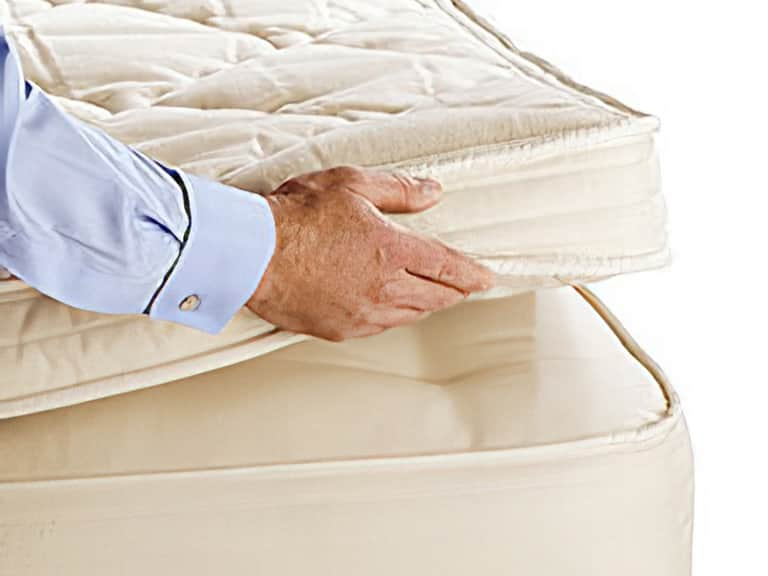
The cover is easy to overlook because it appears to be a simple wrapper. In fact, it influences the immediate feel of the mattress, protects the interior, and may contribute to temperature and moisture management. Organic cotton is a common cover material in organic bedding; wool may also appear in quilting or as a component of the mattress’s outer construction. Other products use different textiles or blends.
A cover’s fiber content is only one detail. Its weave, thickness, quilting, and tension can change how the surface behaves. A tightly fitted cover may slightly restrain the comfort layers, while a deeply quilted top adds its own cushioning. If wool or cotton is quilted into the cover, the surface may feel different from a smooth stretch-knit cover over latex. What matters is the completed construction, not just the materials named in a headline.
Some covers are removable; others are not intended to be taken off. This difference has practical consequences. Before purchase, check the care instructions rather than assuming that a zipper means the cover can be washed. A removable cover may still require spot cleaning or professional care. If a cover is not removable, a washable mattress protector can help guard against spills and ordinary soiling, provided it is compatible with the mattress and does not materially alter the feel.
Breathability is often promoted as a feature of latex and natural fibers. Airflow through a layer depends on its structure, thickness, perforation, and the other materials surrounding it. The bedding, room temperature, humidity, sleeper, and mattress foundation all play a role in perceived warmth. “Naturally breathable” is not a guarantee that every sleeper will stay cool, so it is useful to read the full construction details and the care or comfort guidance supplied by the maker.
How the layers work together
Imagine a firm latex core under a comparatively soft upper layer. The sleeper first encounters the more yielding surface; as the body settles, the core provides deeper resistance. Reverse the relationship—put a firmer latex layer on top—and the mattress may feel more immediate and less cushioned, even if the same materials are present. The order, thickness, and firmness of layers can therefore matter as much as the ingredient list.
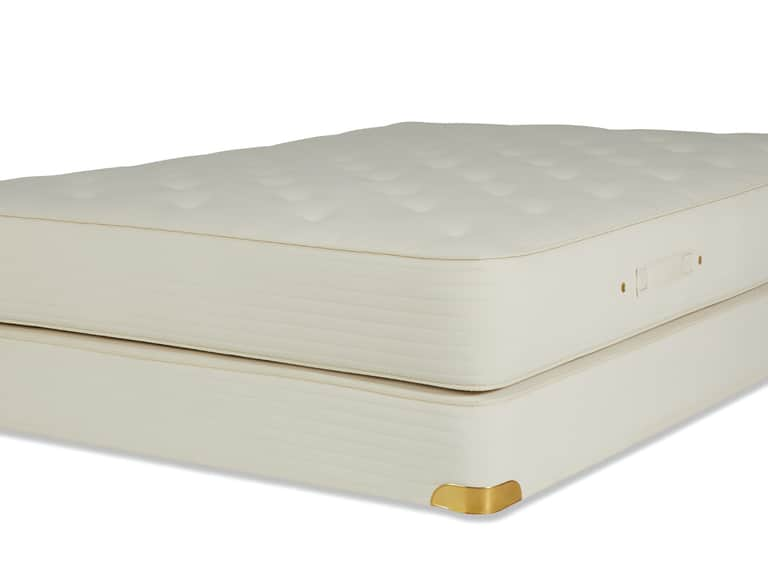
The cover adds another variable. A quilted cover containing wool or cotton can soften the first contact and slightly change how directly the sleeper feels the latex underneath. A thinner cover may make the foam’s response more evident. The mattress foundation contributes too: a suitable, stable base supports the mattress as designed, whereas an incompatible foundation can affect feel and may complicate warranty claims.
This is why comparisons based on a single specification—such as “natural latex,” “medium firm,” or “organic cotton cover”—are incomplete. Read across the full materials list. Then consider the mattress as a sequence: what lies on top, what sits below it, and what supports the whole assembly. A well-documented product makes that sequence understandable.
Certifications: helpful, but not a shortcut
Certifications can help consumers interpret material and processing claims, but their scope varies. Some standards focus on the organic status of agricultural inputs or supply chains; others address testing for specified substances or manufacturing criteria. A certification associated with one ingredient should not be assumed to certify every component of a finished mattress.
When you see a certification claim, check what product or material it covers, who issued it, and whether the manufacturer supplies a certificate or a way to verify the claim. The precise standard name matters. “Certified organic” is less informative than a statement identifying the relevant standard and explaining which layers or fibers are covered. If a retailer uses a badge but the product page does not explain its scope, ask for clarification.
Certifications also do not determine comfort, suitability, or durability. They can provide evidence about particular material or production requirements; they cannot tell you whether the firmness suits your sleeping position, whether the mattress will feel too warm to you, or whether the return terms are practical. Treat certifications as one part of a careful comparison, alongside construction details, warranty language, care instructions, and trial conditions.
A practical comparison checklist
When evaluating an organic latex mattress, use the product page as a document to inspect rather than a brochure to skim. Look for answers to questions such as these:
- What is the latex content, and is it natural, synthetic, or blended?
- How many layers are present, and what are their thicknesses?
- What materials are used in the comfort layers, cover, and quilting?
- Which component does each certification cover, and can the claim be verified?
- Is the cover removable, and what cleaning methods are permitted?
- Which foundation types are compatible with the mattress?
- What are the trial period, return costs, warranty exclusions, and delivery terms?
The last questions are less romantic than the language of natural materials, but they can determine whether a purchase is workable. Return shipping, pickup fees, exchange rules, and minimum trial periods vary. Warranties commonly distinguish manufacturing defects from normal wear, and many define measurable indentation thresholds. Read the terms before ordering, especially if the mattress is made to order or has a limited return policy.
Comfort is personal; evidence can still be useful
No material has a universal sleep advantage. Latex’s resilient feel appeals to some sleepers and feels too buoyant to others. A firmer design may feel stable to one person and press uncomfortably against another. Partners may differ in preferred firmness, motion response, or temperature. A good comparison article should explain these trade-offs rather than describe a single construction as ideal for everyone.
If you are replacing a mattress because of discomfort, identify what you want to change. Do you need a softer surface at the shoulders, more stable support beneath the hips, a different edge feel, or simply a new mattress with clearer material documentation? The answer can help you compare layer designs more intelligently than a search for the most impressive-sounding label.
Where possible, test a comparable feel in person, while remembering that brief showroom impressions are not the same as sleeping on a mattress for several weeks. At home, allow for a reasonable adjustment period and follow the seller’s trial requirements. Keep notes about pressure, alignment, temperature, and movement rather than relying on a vague memory of whether the bed felt “good.”
Care and longevity begin with the instructions
Maintenance is another aspect of mattress construction. Some latex mattresses can be rotated; others have specific orientation or care guidance. A one-sided design should not be flipped unless the manufacturer says otherwise. Use a foundation that meets the maker’s spacing and support requirements, and avoid exposing latex to direct sunlight or concentrated heat when care instructions advise against it.
A protector can reduce the chance of stains and moisture reaching the cover, though it may change the surface feel or airflow. Choose one that fits securely and is appropriate for the mattress. If cleaning becomes necessary, follow the manufacturer’s instructions rather than applying household products indiscriminately. Natural materials are not maintenance-free materials, and careful handling can help preserve the mattress without making extravagant promises about lifespan.
The clarity test
The most useful sign of a thoughtfully described mattress is not a grand claim but a clear account of its layers. A trustworthy product description distinguishes the core from the comfort system, names the cover materials, identifies blends, and gives meaningful dimensions. It explains certification scope and care, and it makes the practical terms visible before checkout.
When those details are absent, the uncertainty is itself information. A buyer should not have to infer the composition of a latex mattress from a product name, nor should “organic” be asked to do the work of a complete specification. A measured, transparent comparison gives you the basis to decide whether the construction fits your preferences and priorities.
In the end, the core, cover, and comfort layers are not separate selling points arranged in a list. They are parts of one design, each affecting the experience of the others. Read the materials carefully, compare like with like, and take the practical terms seriously. The best organic latex mattress is not the one with the most persuasive adjectives; it is the one whose construction you understand and whose feel works for you.
Frequently asked questions
Is every latex mattress made from natural rubber?
No. Latex may be natural, synthetic, or blended. Check the product’s material breakdown to understand what the core contains and whether other foams appear in the construction.
Does an organic cover mean the entire mattress is organic?
Not necessarily. A claim may apply to a particular textile or ingredient rather than every component. Look for the named certification and its scope, as well as a full layer-by-layer description.
Are thicker latex comfort layers always softer?
No. Thickness is only one factor. Firmness, formulation, layer order, cover construction, and the mattress beneath the comfort layer all contribute to the final feel.
What should I check before buying?
Review the latex composition, each layer’s materials and thickness, cover care, foundation requirements, certification scope, trial and return terms, and warranty exclusions. These details make comparisons more concrete and help prevent surprises after delivery.